
- Business Leaders
- Edición 8
- Profesores
Two Nations, Two Paths: How Sanctions and Trade Integration Shape Global Business
In the narrow corridors of Tehran’s Grand Bazaar, a centuries-old center of trade that has survived revolutions and empires, shopkeepers closed their stalls in late December 2025 as the Iranian rial…
In the narrow corridors of Tehran’s Grand Bazaar, a centuries-old center of trade that has survived revolutions and empires, shopkeepers closed their stalls in late December 2025 as the Iranian rial collapsed to record lows. The immediate trigger for the protests was economic in nature, driven by runaway inflation, collapsing purchasing power, and the inability of businesses and households to function under worsening financial conditions. However, these economic shocks were not the sole cause of the unrest. They intersected with long-standing social, political, and generational injustices rooted in the unresolved legacies of the Islamic Revolution in 1979, including demands for dignity, representation, and freedom. While these broader societal dynamics are essential for understanding the full scope of the crisis, this article deliberately focuses on the business, economic, and supply-chain dimensions of the protests. As demonstrations spread nationwide and calls for an end to decades of isolation grew louder, the government’s violent response by early January 2026 resulted in tens of thousands of deaths, making it one of the bloodiest episodes in Iran’s modern history.
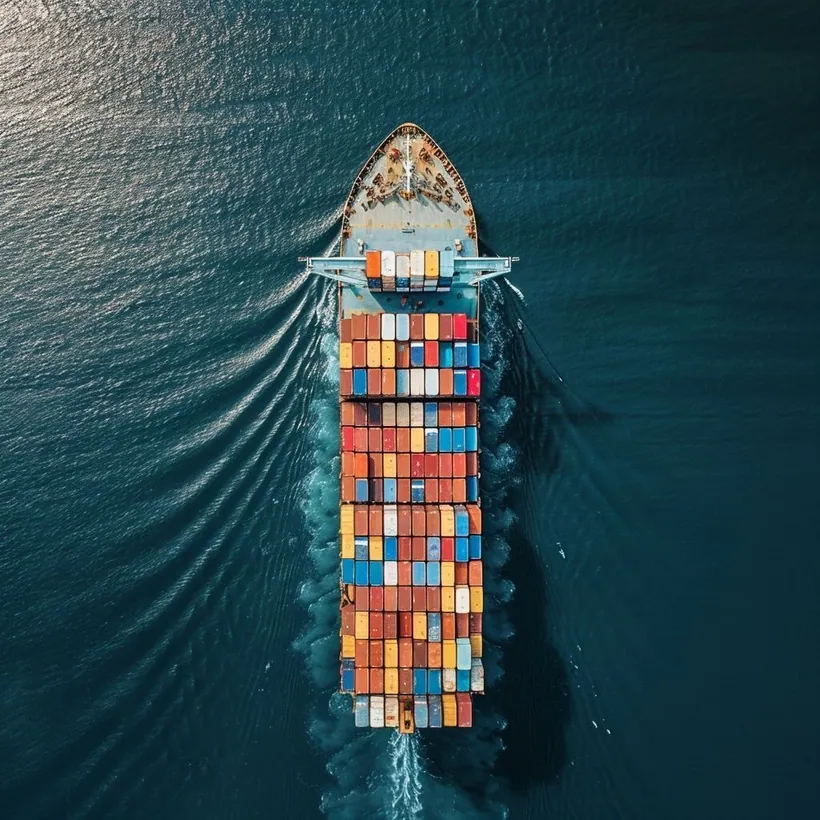
This crisis stands in sharp contrast to the busy industrial zones along Mexico’s northern border, where factories, warehouses, and logistics centers continue expanding due to nearshoring investments.
Supported by the USMCA trade agreement, Mexico has attracted billions of dollars in foreign capital. Together, Iran and Mexico illustrate two very different economic paths in a fragmented global system: Iran’s deepening isolation under sanctions has produced instability and unrest, while Mexico’s integration into regional trade networks has supported modest but resilient growth.
By early February 2026, the global economy is struggling with rising geopolitical tensions that are reshaping supply chains and investment decisions. The World Economic Forum’s Global Risks Report identifies geoeconomic confrontation, including sanctions, tariffs, and investment controls, as one of the most serious threats to economic stability. These pressures increase supply chain vulnerabilities and encourage regionalization rather than globalization. UNCTAD reports show that firms are increasingly adopting “local-for-local” production strategies to reduce exposure to trade barriers and security risks. In this fragmented and multipolar environment, cultural intelligence has become an essential skill for managers operating across borders. Iran’s hierarchical and highcontext culture, shaped by long-term sanctions and internal pressures, differs greatly from Mexico’s culture within an open trade system. The protests in Iran, which began on December 28, 2025, and continued into mid- January 2026, demonstrate how economic hardship can quickly turn into large-scale social unrest, further weakening a country’s position in global markets. The immediate trigger was a sharp fall in the value of the rial, which lost nearly half its value against the US dollar during 2025. Bazaar merchants in Tehran were among the first to protest, as imported inflation and rising costs made it impossible to keep their businesses operating. Prices for basic goods increased dramatically, with some food categories rising by more than 70 to 100 percent, pushing essentials such as bread and dairy beyond the reach of many families. As protests spread to more than 210 cities across all 31 provinces, including areas traditionally loyal to the government, demands shifted from economic relief to calls for regime change. The movement involved a wide range of participants, including women, ethnic minorities, and parts of the middle class, although their visibility differed from earlier movements such as the 2022–2023 Woman, Life, Freedom protests.
The state’s response was rapid and extremely violent. On January 8, 2026, the government imposed a nationwide internet and communications blackout, cutting Iran off from the outside world and enabling a harsh crackdown.
Security forces fired on protesters in multiple cities, resulting in what many observers described as a massacre. Estimates of the number of deaths vary, but all indicate severe violence. The Human Rights Activists News Agency reported nearly seven thousand confirmed deaths by early February, with many more cases still under investigation. Other organizations, including Amnesty International, suggested the total could exceed thirty thousand, particularly during the intense violence of January 8 and 9. Witnesses described horrifying scenes of people of all ages being shot in the streets, overcrowded hospitals, and mass burials intended to hide the true scale of the killings. In cities such as Rasht and Shiraz, protests turned into prolonged confrontations, while reports of chemical agents used by security forces led to calls for international investigations into crimes against humanity. Although the protests were largely suppressed by mid-January through arrests, executions, and digital surveillance, the government’s fear of renewed unrest remains strong. Officials have warned that external pressures, including possible US military actions, could trigger new protests.
It is clear that without serious reforms addressing corruption, repression, and economic mismanagement, similar uprisings were likely to return. Iran’s economic problems remain severe. Inflation averaged over 42 percent in 2025 and is expected to stay above 40 percent in 2026, with even higher shortterm spikes. The rial continues to lose value, trading at around 1.5 million to the US dollar on the open market. Sanctions, reinforced by the reactivation of UN measures in late 2025 due to Iran’s nuclear program, have frozen more than $120 billion in foreign reserves and sharply reduced oil exports. As a result, Iran faces a projected GDP contraction in 2026, compounded by falling oil prices and structural energy shortages. From a cultural perspective, Iran’s medium-to-high power distance encourages acceptance of hierarchical authority, while its moderate collectivism supports strong informal networks that help people cope in high-context environments. Social practices such as taarof, which emphasizes politeness and indirect communication, shape both everyday interactions and business relationships.
Trust is built slowly through personal connections rather than formal contracts. In a sanctioned and unstable market, companies must navigate complex bureaucracies with patience and rely on informal relationships to manage risk. The protests have further disrupted supply chains through strikes, damaged infrastructure, and heightened uncertainty, discouraging foreign investment. At the same time, Iran’s ability to adapt through local networks and alternative channels offers lessons in redundancy and localization that can be valuable for firms operating in other high-risk environments.
The human consequences of isolation are visible throughout Iranian society. Families describe loved ones disappearing during the crackdown, only to have their bodies returned later bearing signs of abuse. Religious and community spaces were damaged or destroyed, symbolizing the breakdown of social cohesion. Increased digital controls and restrictions on global platforms reflect the state’s ongoing fear of renewed mobilization. These measures not only suppress dissent but also limit access to global markets, information, and business partners. For external observers, Iran’s experience highlights how sanctions can unintentionally intensify internal instability, with potential spillover effects beyond national borders.
Mexico offers a contrasting example shaped by trade integration rather than isolation. As a major destination for nearshoring, Mexico has benefited from global efforts to shorten and regionalize supply chains. Foreign direct investment reached record levels in 2025, with manufacturing receiving the largest share. The United States remains the main investor, but capital also flows from Europe and Asia, reducing dependence on any single partner. Exports are expected to continue growing, supported by the USMCA, which provides preferential access to the US market. Large infrastructure projects are strengthening Mexico’s position in sectors such as automotive manufacturing, electronics, and advanced technology.
Economic growth in Mexico is projected to remain moderate in 2026, reflecting both opportunities and constraints. Inflation has eased, and monetary policy has become more supportive, but structural challenges persist, including inequality and a large informal labor sector. Uncertainty surrounding the upcoming USMCA review creates additional risk, particularly if trade rules become more restrictive. However, Mexico’s diversified investment base and deep integration into regional supply chains provide a degree of resilience.
Culturally, Mexico exhibits high power distance and strong collectivism, where respect for authority and personal relationships play a central role in business. Trust is built through face-to-face interactions, loyalty, and long-term engagement, often within flexible and overlapping timelines. These cultural traits support nearshoring by enabling rapid coordination and strong team cohesion, even in complex environments.
Comparing Iran and Mexico reveals important lessons for managing supply chains under geopolitical fragmentation. Iran’s isolation has produced inflation, currency instability, and social unrest that disrupt economic activity, while Mexico’s openness has attracted investment and supported export growth despite external risks.
Both societies require careful navigation of hierarchy, but they differ in how collectivism and uncertainty avoidance shape behavior. For global managers, these insights suggest combining redundancy and localization strategies with regional partnerships, adapting negotiation styles to cultural contexts, and integrating geopolitical and cultural analysis into risk management. In a divided global economy, Iran’s experience warns of the costs of disconnection, including economic decline and social trauma, while Mexico’s path demonstrates the advantages of integration and adaptability. Developing cultural agility and strategic flexibility allows organizations to transform uncertainty into resilience and sustain operations across an increasingly fragmented world.
 Léelo en la revista
Business Leaders · Edición 8
Abre el artículo con su diseño original, página 13 →